
Iranians are making history - again

[Always a pleasure to share guest articles from prominent British MP and former Cabinet Minister Tom Tugendhat - one of the only Members of Parliament to speak against the JCPOA. Be sure to sign up to his Substack DISPATCHES for more insightful analysis. Today, in stark contrast to our government's pronouncements, Tom clearly states why the fall of the Iranian regime is in the British (and Western) interest. It leaves us with 2 questions: a) Where are all the Free Iran protests? and b) Why isn’t Tom our Foreign Secretary? - DCS]
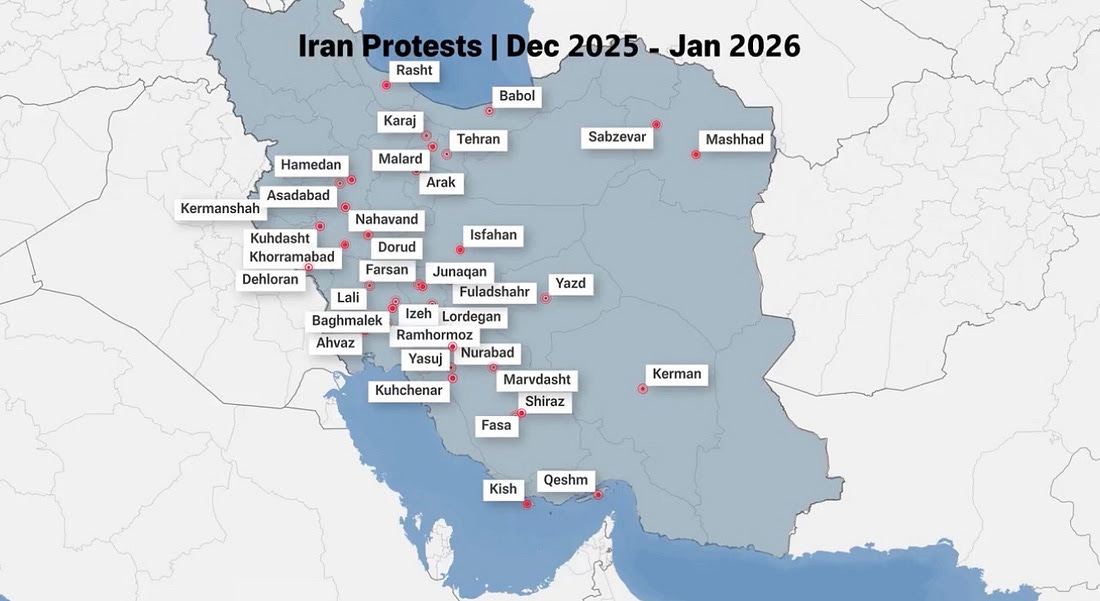
Tonight, Iranians are back on the streets. The scale and spread of the uprisings suggest something more than a passing surge of anger. Across cities and towns, people are challenging a regime that has ruled for more than four decades through fear, patronage, and organised violence. These protests are not an isolated moment. They are part of a long unravelling, one that has accelerated over years and now appears to be entering a more dangerous and decisive phase. Britain cannot determine how this ends, nor should it pretend it can, but what happens next will shape our security, our economy, and the international order we inhabit.
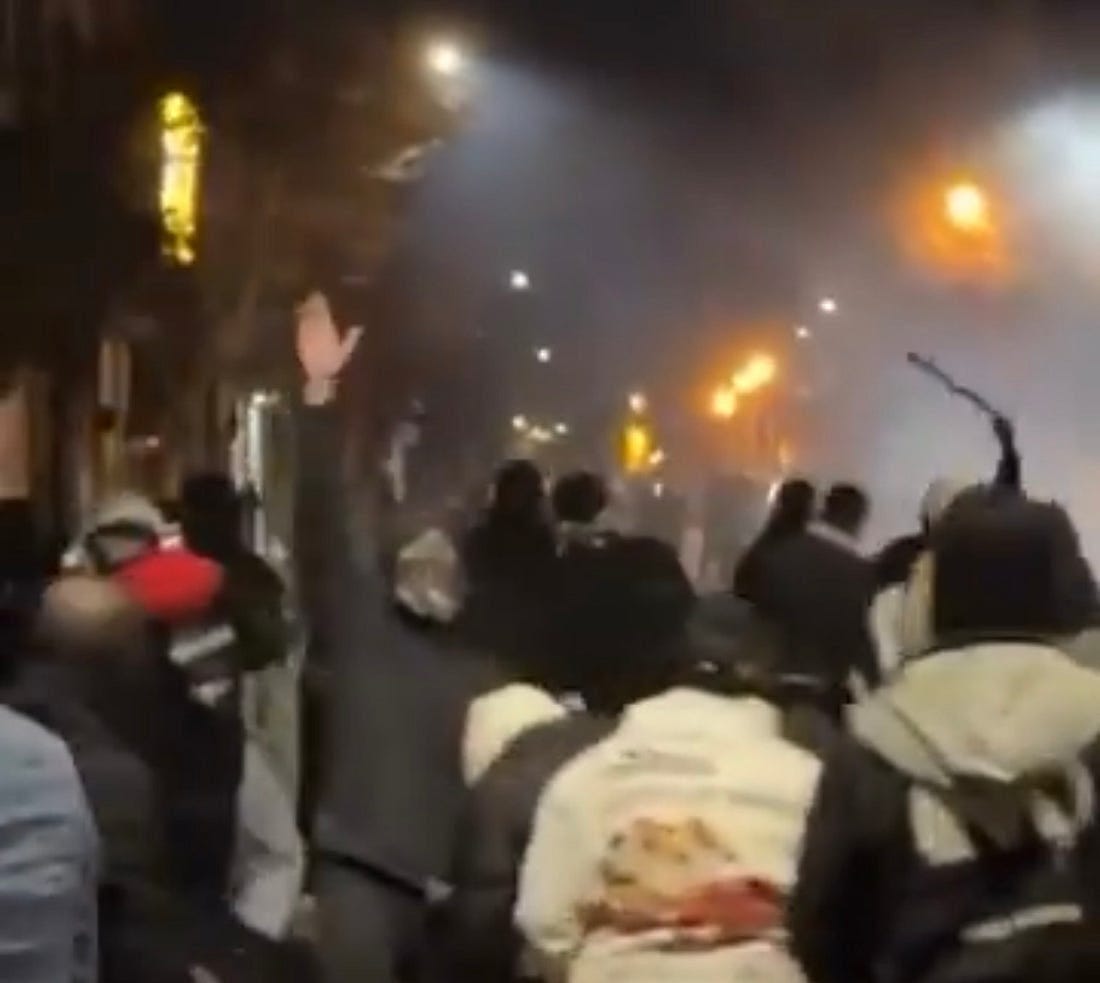
To understand why, we must be clear about what the Islamic Republic is and what it does.
The Iranian regime is not simply an authoritarian government pursuing policies we dislike. It is a system that survives by repression at home and aggression abroad, and it has deliberately targeted Britain and British citizens. Tehran’s agents have plotted assassinations and attacks on British soil, pursued journalists and dissidents living under our protection, organised violence against British forces in the Middle East, and attempted to kill British diplomats. Iranian backed attacks on Israel have killed British citizens, while the regime’s sponsorship of Hamas has contributed to radicalisation within the United Kingdom itself.
Beyond these direct threats, Iran has played a central role in destabilising an arc of states stretching from Afghanistan to Lebanon. That destabilisation has driven refugee flows from Iran itself and from countries whose institutions have been weakened or shattered by Iranian intervention, including Iraq, Syria, Yemen, and Lebanon. These flows do not stop at the region’s borders. They reach Europe and Britain, placing sustained pressure on public services, social cohesion, and political trust.
Iranian weapons supplied to the Houthis have helped close the Red Sea to commercial shipping, driving up insurance premiums, freight costs, and ultimately prices paid by British consumers. Hezbollah’s growing arsenal has altered the security calculus across the Eastern Mediterranean, increasing risks to British interests in the region, including the sovereign base areas in Cyprus. All of this has unfolded alongside Tehran’s military partnership with Russia, which has helped sustain Moscow’s war in Ukraine through the supply of drones, missiles, and components, raising the cost of food and fuel across Europe. At the same time, sanctions busting Chinese tankers have secured discounted Iranian oil, marginally lowering manufacturing costs in Asia while European industry pays more.
This isn’t abstract geopolitics. The Iranian regime has been an enemy of Britain because it has chosen to act as one, and defending ourselves has already carried a real and growing cost.
At home, the nature of the regime is even clearer. The Islamic Republic systematically persecutes entire communities by identity. Baha’is are denied legal recognition, barred from higher education, stripped of property, imprisoned, and in past decades executed solely for their faith. Jews, though formally recognised, live under constant pressure, surveillance, and antisemitic incitement from the state. Gay men and women are criminalised, imprisoned, tortured, and in some cases executed under laws that make consensual same-sex relationships punishable by death. Women are beaten, jailed, and killed for refusing obedience. Protesters are shot, hanged, or disappeared. This is not incidental cruelty, it is the nature of the system itself, and the way it governs
For years, Western policy rested on a comforting but dangerous assumption, that this regime could be moderated through engagement, economic integration, and diplomatic recognition. The Joint Comprehensive Plan of Action was the clearest expression of that belief. It promised stability by buying time and restraint by offering legitimacy. I did not accept that logic at the time, and I said so publicly. I was one of the only Members of Parliament to speak against the JCPOA, not because I opposed diplomacy in principle, but because the agreement misunderstood the nature of the regime it sought to manage. It treated Tehran as a conventional state seeking security, rather than as an ideological system that uses instability and violence as tools of rule.
In practice, the deal liberated billions in frozen assets and future revenues. That money did not flow into hospitals, schools, or infrastructure for ordinary Iranians. It flowed outward, into militias, missiles, and mass graves. Cash that could have rebuilt lives at home was instead used to fill graveyards in Syria, to arm Hezbollah, to sustain militias in Iraq, and to entrench Iranian power across the region. Confrontation was postponed, but decay accelerated. The system did not moderate, it hollowed out.
The unravelling did not begin tonight. It began to accelerate decisively in January 2020 with the death of Qasem Soleimani. Soleimani was not merely a senior general. He was the architect of Iran’s regional empire, the man who bound together militias from Lebanon to Yemen, balanced rival factions, and exercised authority through a careful mixture of fear, loyalty, and money. His removal did not collapse the system overnight, but it exposed how dependent Iran’s external project had become on a single figure and how fragile the structures beneath him really were.
Since then, the regime has grown more brittle and more reckless. Proxy forces have acted with less discipline. Repression at home has intensified as confidence has ebbed. Economic mismanagement has deepened. The state has survived, but it has done so by narrowing its base and escalating violence. Each major protest wave since 2020 has gone further than the last, revealing not only the depth of popular anger but growing anxiety within the elite itself. The uprisings unfolding tonight sit squarely within that trajectory.
It is not Britain’s role to decide Iran’s future. That responsibility belongs to Iranians alone. But the implications of either meaningful change or continued decay would be global and immediate. A different Iran would reshape energy markets overnight. The return of more than six million barrels a day of oil would lower prices, ease inflation across Europe and North America, and place acute fiscal strain on petrostates, particularly Russia. The energy risk premium that has distorted economies since 2022 would fall, with direct consequences for manufacturing costs, household bills, and government finances.
China would lose access to heavily discounted Iranian oil secured through sanctions busting, weakening its leverage in the Gulf and raising costs for refiners and manufacturers across Asia. That shift would narrow the gap with Europe and force Beijing to deepen dependence on Moscow and Central Asia for energy. Russia would lose far more than cheap drones. Its military and political partnership with Tehran would unravel, cooperation in Syria and the Caucasus would end, and Moscow’s influence across the Middle East would diminish sharply without Iran as a strategic ally.
Iranian backed militias would fragment. Hezbollah’s power would be degraded. Houthi attacks on shipping would become harder to sustain. Insurance costs would fall and global freight prices would ease. Iraq would gain greater room to govern as militia dominance weakened, unlocking further energy flows from the Gulf and compounding the benefit to energy importing states worldwide.
None of this would be risk free. Periods of succession always carry danger, and nuclear escalation risks would rise before they fell. But if a less confrontational leadership emerged, sanctions would end, capital would surge back into Iran, and investment would be diverted away from other states, reshaping regional alignments and reducing demands for American security guarantees.
A recent analysis in Engelsberg Ideas rightly cautions against romanticising regime change. There are no clean endings and no guaranteed transitions. That warning is justified. But so is clarity. The status quo is neither stable nor contained, and it is far from cost free. It is a system that survives by spreading fear at home and disorder abroad.
At the centre of this moment lies a simple moral truth. The Islamic Republic has killed more Muslims than any of the enemies it claims to resist. Iranians, Syrians, Lebanese, Yemenis, Sudanese, and others have paid the price for a regime that imprisons women, murders religious minorities, executes gay people, and exports violence while cloaking itself in the language of resistance
Iran is moving again tonight because that system is rotting from within. Whether that rot produces renewal or catastrophe will be decided by forces beyond Britain’s control. But we should be clear about what is failing, why it is failing, and why it matters. History does not always announce itself politely. Sometimes it speaks through crowds in the street. Tonight, Iran is speaking. The world should listen.
For more truth on foreign policy, read:
Somaliland is a State

Have you read PAX ARABICA? Become a paid subscriber to read my groundbreaking work on Arab Imperialism in full.
 | A guest post by
|