
A Paradigm Shift for the Middle East?
Hope for a warm peace is tempered by history in Chapter 18 of PAX ARABICA

PLEASE NOTE: Much of the following chapter comes from a previous essay “Eternal Peace: A History”, yet large swathes of it have been changed and edited, including the entirely new last third of the essay. In the context of the book “Pax Arabica”, it asks whether a cold peace mediated by The Psychology of Strength (Chapter 17) can be transformed into a warm, lasting peace between Israel and the Arab States.
To see behind the paywall on this and all other serialised “Guerre and Shalom” books, please consider a paid annual membership. It’s a bargain at £45/$58.
PART 1: BABEL
Introduction: The time to change the narrative is now! // Chapter 1: On Arab Imperialism // Chapter 2: On the Vanguard //Chapter 3: On Dictatorial Oppression // Chapter 4: On Islamist “Freedom” // Chapter 5: On Islamist Misery // Chapter 6: On Arab Apartheid // Chapter 7: On Middle Eastern Minorities // Chapter 8: On the Masters of Ethnic Cleansing // Chapter 9: On Genocide, Slavery and Racist Indifference //Chapter 10: On Unjust “Justice” and the Inversion of Language // Chapter 11: On Appeasement // Chapter 12: On the Man who stood against Pax Arabica
PART 2: EDEN
Chapter 13: On Nations, States and the Nation State // Chapter 14: On Sykes-Picot // Chapter 15: On Zionism and the duty to protect // Chapter 16: On the New Regional Sheriff // Chapter 17: On the Psychology of Strength
COMING SOON: Chapter 19: On the Post-Imperial Two State Solution // Chapter 20: On the End of the Great Game
PAX ARABICA
CHAPTER 18: On the Paradigm Shift
“ETERNAL PEACE”: A HISTORY & A HOPE
“Eternal peace”: A Hubristic History
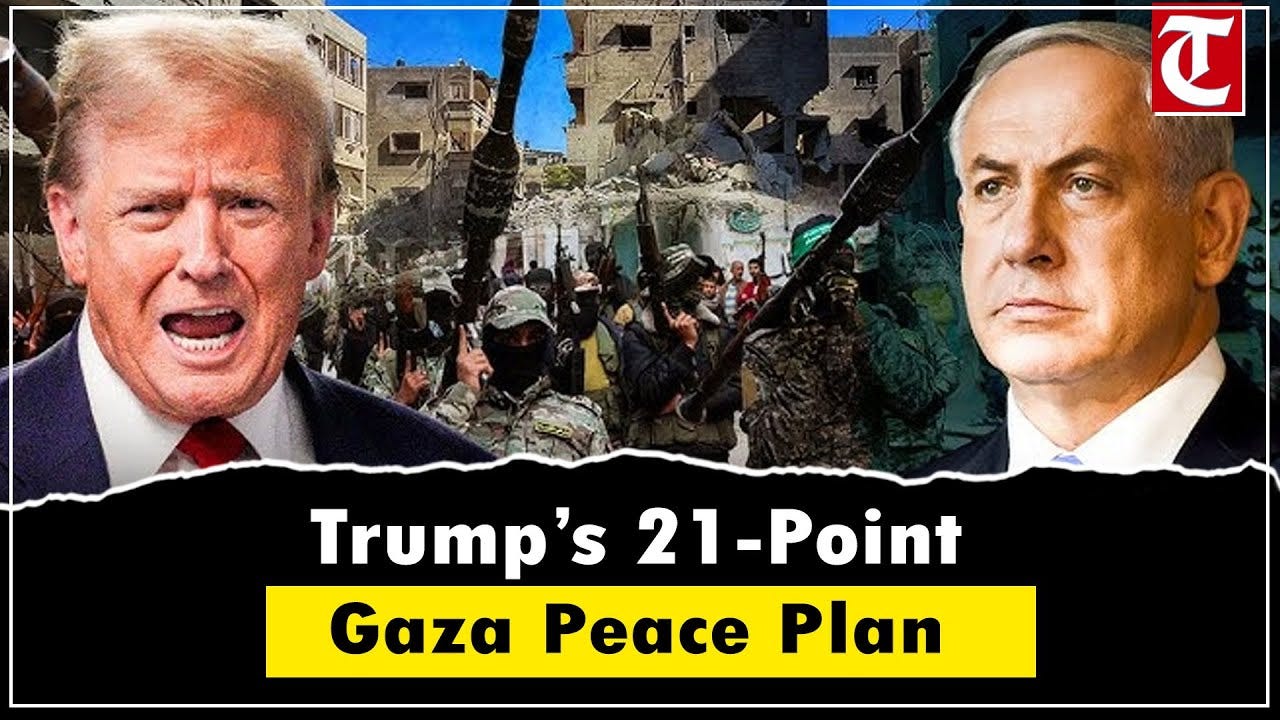
Trump’s 21-point plan for ending the war in Gaza has been hailed by the man himself as the dawn of “Eternal Peace”. It’s fair to say that the President isn’t a student of history, otherwise he wouldn’t have dared fallen into such a hubristic trap.
We all hope for eternal peace. We pray for it daily in our synagogues, churches and some of our mosques. An era of messianic bliss where the lion dwells with the lamb and the infant plays near the cobras’ den —or, at least, as a preamble, warm inter-state relations underpinned by commerce.
But the problem isn’t the dream –-it’s the Middle Eastern reality. A cold peace can emerge through the psychology of strength, but a warm peace needs something more. It needs a complete paradigm shift.
No-one is saying that it isn’t possible, but the historical precedents for “eternal peace” haven’t been all that promising (That’s British understatement). A treaty with precisely that appellation was signed in 1686 between Poland and Russia. Its clauses included the ceding of Kiev to Russia and as all irony-allergic readers are aware, the status of that city has never been in doubt again.
In reality, Russia and Poland have been in constant conflict ever since to the point where Poland completely ceased to exist for over a century1. She has been occupied by Russia in the context of both the Russian Empire and the Soviet Union, and to this day, Poland feels it necessary to be a member of an American-led defence alliance to ward off the possibility of the Bear’s attack. Meanwhile, Ukraine, of Kiev fame, is currently engaged in an existential war with her ever aggressive neighbour lurking menacingly on her territory. So much for eternal peace.
Lest we think that this phenomenon is limited to Europe, we would do well to remind ourselves of the events of the Early Middle Ages. There, in the heart of the Northern Middle East, the Eastern Roman Byzantines and the Persian Sassanians finally came to terms. In a famed treaty of 532 CE, known alternatively at the “Perpetual Peace” or “The Treaty of Eternal Peace”, Byzantine Emperor Justinian I and the Sassanid King Khosrow I agreed to a permanent cessation of hostilities between the two warring empires. It was meant to endure indefinitely, but needless to say it broke down in short order. A mere 8 years later, the Persians breached their treaty obligations by resuming their hostilities against the Byzantine Empire2. It is in this light that Trump is perhaps unwise to toast his diplomacy with a poisoned chalice.
Yet none of this is to say that his peace efforts are unappreciated. True enough, he is motivated by the baubles of a Nobel Peace Prize and he has an ego which challenges the Mongol Empire for size, but, nonetheless, his efforts have already led to the release of the hostages, that being the condition of just the first stage of the plan. Having triumphed in this regard, we gladly thank him for his intervention.
Nonetheless, what he’s most unlikely to realise is eternal peace, and just like the ominous 532 CE precedent, hostilities are sure to return in the near future. Even to the extent that they are not, that is a measure of Israeli strength in the Wild Middle East. As per the psychological dynamics outlined in the previous chapter, showing that you mean business can create deterrents — and a cold, utilitarian peace. Yet that is but a State of Nature, always one false move always from a State of War3.
Survival, and maintaining the power balance, is a universe away from warm, cuddly, uninterrupted co-existence, that which I understand by the term “eternal peace”. Trump is, likely, living in a dream world.
Is this cynicism? Shouldn’t we just give peace a chance? To be sure, the precedents in Ukraine and the Middle East are far from rosy, but isn’t it a council of despair to speak as Jeremiah from the pit?
I should state, most emphatically, that eternal peace between two nations is entirely possible and as this chapter goes on, we shall unveil one particularly prominent example. Indeed, in the Byzantine- Sassanian case, a perpetual unity of sorts did eventually come — just not in the way that either Empire expected. With the arrival of Islam, both polities were utterly crushed and their territories were joined as one under the tender sword of the Umayyad Empire. This shows us that peace is possible, but it takes an unprecedented paradigm shift — in this case, the crushing defeat of both Powers by a third party.
Kant’s “Perpetual Peace” and Cosmopolitan Utopia
Keep reading with a 7-day free trial
Subscribe to Guerre and Shalom to keep reading this post and get 7 days of free access to the full post archives.